On this page
Cloth diapers can reduce recurring disposable purchases, but the saving depends on equipment cost, laundering, fit and how much of the routine stays disposable. The reusable diaper’s purchase price is only one part of the comparison. Include covers, another size stage where needed, storage, detergent, washing, drying and backup diapers over the same period.
This example uses Esembly’s published product prices to show a two-piece system’s cost structure. It is not an endorsement or a national average for cloth diapers. Other systems use different absorbency, covers and washing instructions, so compare a functioning arrangement rather than counting every item called a diaper as equivalent.
Key figures
- $56 Esembly cloth diaper trial kit
- $419 Example: smaller full-time cloth diaper kit
- $533 Example: larger full-time cloth diaper kit
A trial kit and a full-time supply answer different questions
| Published component or calculated combination | Price or subtotal | Scope |
|---|---|---|
| Selected 60 Day Try-It Kit | $56, against $70 | Three Inners, one Outer, wet bag and trial powder |
| Inner Snap three-pack | $38.50 | Absorbent fitted diapers; covers separate |
| Selected Outer cover | $18.50 | Waterproof layer; absorbent diaper separate |
| 24 Inners plus six Outers | $419 | Eight three-packs plus six covers |
| 30 Inners plus eight Outers | $533 | Ten three-packs plus eight covers |
| Washing Powder canister | $23.50 | Three pounds, 48 scoops |
Source note: Esembly’s kit, Inner, Outer and powder product pages checked October 2026. Kit and cover prices refer to the displayed selections; prints and options can differ. The $419 and $533 subtotals are arithmetic at published component prices, with tax, shipping, storage and laundry excluded.
- Trial kit$56
- Smaller full-time kit$419
- Larger full-time kit$533
Source note: Esembly's kit, Inner, Outer and powder product pages checked October 2026. Kit and cover prices refer to the displayed selections; prints and options can differ. The $419 and $533 subtotals are arithmetic at published component prices, with tax, shipping, storage and laundry excluded.
Esembly recommends 24–30 Inners and six to eight Outers for full-time newborn use of its system. That is the manufacturer’s supply guidance, not a universal count for every cloth design. A trial kit’s three Inners let the household test fit and handling; they do not constitute that full-time supply.
The selected kit has a 60-day trial arrangement that allows one used kit per customer to be returned, excluding the detergent and shipping fees from the return arrangement. Buying several kits does not make every used kit returnable. Review the terms for the selected order before treating the trial as a fully refundable stash purchase.
Two sizes can create another equipment purchase
The manufacturer lists approximate size-one fit at 7–17 pounds and size two at 18–35 pounds. Those are product ranges, not a growth schedule or guidance for changing an infant’s weight. Fit and the baby’s stage determine when another size is required.
For scale, purchasing the same $419 component combination in both stages would cost $838 before other supplies. Two $533 combinations would cost $1,066. These calculations assume the same displayed prices and counts at each purchase; they are not a forecast of future sale prices or a requirement to buy both stages immediately.
If equipment can be reused for another child, allocate that benefit only after assessing its condition and usability. Do not assume a cash resale price before a buyer exists, or a guaranteed second-child saving before the remaining fit and washing requirements are known.
The diaper subscription comparison addresses another purchase schedule. Keep its box counts and delivery interval separate from this reusable supply. A delivery discount is not evidence that a cloth system or disposable plan is cheaper across different periods.
Detergent is a recurring cost rather than a free accessory
The powder canister lists 48 scoops for $23.50. Esembly’s diaper instructions prescribe one scoop in a first wash and two in a second, so a batch uses three scoops. One canister therefore supplies 16 batches at that dose, with an allocated powder cost of $1.46875 per batch.
The product calls for washing every two to three days. For a 365-day budgeting illustration, 122 batches approximate a three-day interval and 183 approximate a two-day interval. Actual dates and the manufacturer’s handling instructions govern the routine; these counts are annualization examples, not a prescription to delay a soiled-diaper wash.
At 122 batches, the powder requirement is 366 scoops, or 7.625 canisters. Buying whole canisters costs $188 for eight, leaving some powder. At 183 batches, it is 549 scoops, or 11.4375 canisters: twelve cost $282. This distinguishes purchased packages from the cost of powder consumed.
Do not equate 48 scoops with 48 diaper batches. That would understate the detergent expense by a factor of three for this manufacturer’s routine. A refill has another pack size and price, so replace both before comparing a subscription or bulk purchase.
Washing and drying can reverse an apparent saving
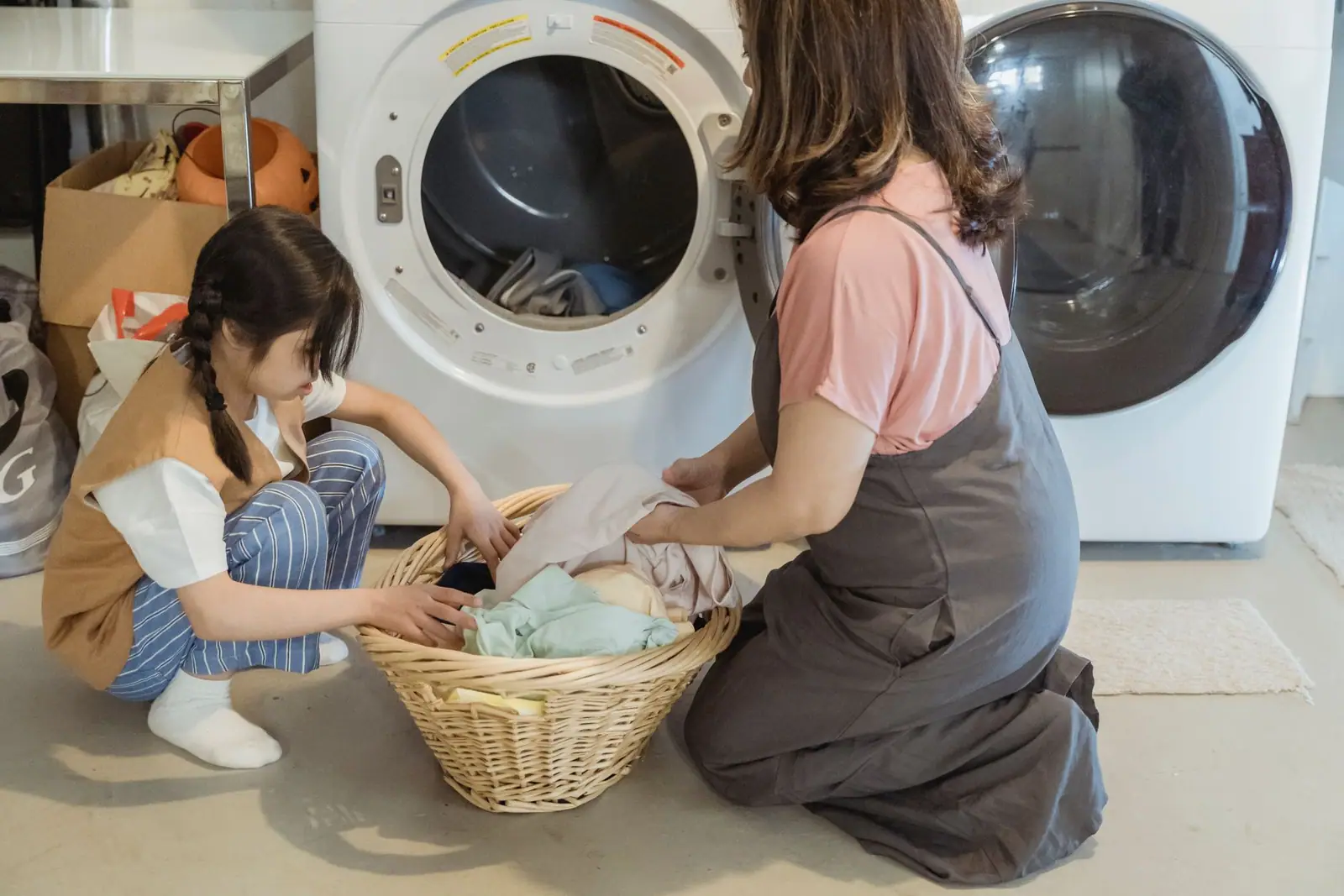
For a clearly assumed utility case, use 3 kWh and 28 gallons for each finished diaper batch across its wash stages and drying. The energy quantity includes any purchased electric water heating attributed to the batch. These are sensitivity inputs, not tested consumption for this system or every washer.
At EIA’s July 2026 national electricity average of 18.31 cents per kWh, the assumed electricity costs $0.5493. With an assumed variable water-and-sewer rate of half a cent per gallon, water adds $0.14. Combined utilities are $0.6893 per batch, before powder and equipment wear.
For 122 batches, those utility assumptions total $84.09. Adding eight purchased powder canisters gives $272.09 of annual cash spending. For 183 batches, utilities are $126.14 and twelve canisters bring the total to $408.14. Some powder remains in both cases, and the figures omit other supplies and machine depreciation.
The baby laundry cost guide explains ordinary clothing loads. This cloth comparison uses separate inputs because the diaper routine has several wash stages. If shared machines charge by cycle, count all of those paid cycles instead of substituting one home-load cost.
Backup disposables and care arrangements belong in both totals
For a disposable sensitivity comparison, assume eight changes daily and a 25-cent unit price. Across 365 days, that is 2,920 diapers and $730. At a 40-cent unit price, the same count costs $1,168. Change frequency and unit price are assumptions, not a published baby’s intake or a national diaper-price average.
Now assume the cloth plan still uses two disposable diapers daily for part of its care arrangements. At the same 25-cent assumption, backup spending becomes $182.50 annually. Add it to reusable equipment and washing rather than claiming that every disposable purchase has disappeared.
A one-stage $419 equipment purchase plus the 122-batch cash example and that backup allowance totals $873.59 before excluded supplies. This is higher than the $730 all-disposable assumption. At a different disposable price or with already-owned usable cloth equipment, the conclusion can change; the example demonstrates the comparison, not a verdict for every family.
Follow the diaper and laundry manufacturers’ instructions and confirm what the childcare provider accepts. For irritation or the baby’s care needs, use pediatric guidance; a low calculated cost does not establish a suitable diapering routine.
Keep the reusable-diaper purchase separate from the furniture used for changes. The changing table versus dresser comparison prices that station without assuming a dedicated table is part of every diaper kit.
Questions people ask
Does the $56 kit cover full-time cloth diapering?
It contains three Inners and one Outer plus trial supplies. The manufacturer separately recommends 24–30 Inners and six to eight Outers for full-time newborn use of its system.
Is one size's equipment the whole cost?
Not necessarily. Esembly lists approximate 7–17-pound and 18–35-pound stages. Price any second-stage equipment the household will need rather than assuming the first supply fits throughout.
How many diaper washes does a 48-scoop canister supply?
At the manufacturer's three-scoop, two-wash routine, it supplies 16 batches. Counting each scoop as a whole diaper batch understates the expense.
Are cloth diapers always cheaper?
No. Compare equipment, washing, drying, storage, replacement and backup disposables over the same period. The result changes with household access, use and unit prices.
Where these figures come from
- 60 Day Try-It Kit: Selected Price and Trial Terms Esembly · esemblybaby.com
- Inner Snap: Pack Price, Sizes and Supply Guidance Esembly · esemblybaby.com
- Outer Covers: Price and Sizing Esembly · esemblybaby.com
- Washing Powder: Price, Scoop Count and Wash Instructions Esembly · esemblybaby.com
- July 2026 Residential Electricity Prices U.S. Energy Information Administration · eia.gov
Figures last checked October 2026.