On this page
Glass and plastic baby bottles are easier to compare when the basket contains the same number and capacity of bottles, with compatible feeding parts. A headline price for a single body is not comparable to a complete multi-bottle pack. The lowest collection price can also belong to a different size or nipple flow.
The October 2026 manufacturer examples below compare two Lansinoh four-packs. They establish a purchase-price difference, not a prediction of which material every family will replace more often. Daycare acceptance, handling, existing equipment and spare-part availability determine whether the more expensive set solves a problem or adds one.
Key figures
- $27.99 Lansinoh plastic pack of four bottles
- $49.49 Lansinoh glass pack of four bottles
- $21.50 Extra cost for the glass four-pack
A matched four-pack comparison shows a $21.50 difference
| Listed U.S. example | Package price | Capacity per bottle | Count | Allocated cost per bottle |
|---|---|---|---|---|
| Purple plastic, medium-flow four-pack | $27.99 | 8 fl oz | 4 | About $7.00 |
| Glass, medium-flow four-pack | $49.49 | 8 fl oz | 4 | About $12.37 |
| Glass premium for the whole pack | $21.50 | Same labeled capacity | 4 | About $5.38 extra |
| Two selected plastic four-packs | $55.98 | 8 fl oz | 8 | About $7.00 |
| Two glass four-packs | $98.98 | 8 fl oz | 8 | About $12.37 |
Source note: Lansinoh’s U.S. plastic 8-ounce and glass 8-ounce product pages and bottle collection, checked October 2026. The plastic price identifies the purple four-pack rather than the white three-pack. Unit figures are allocations rounded to cents; they are not prices for individually sold replacements.
- Plastic four-pack$27.99
- Glass four-pack$49.49
- Two plastic four-packs$55.98
- Two glass four-packs$98.98
Source note: Lansinoh's U.S. plastic 8-ounce and glass 8-ounce product pages and bottle collection, checked October 2026. The plastic price identifies the purple four-pack rather than the white three-pack. Unit figures are allocations rounded to cents; they are not prices for individually sold replacements.
The glass premium is about 77% of the plastic pack’s price, calculated from $21.50 divided by $27.99. That percentage describes these named listings only. It is not a national average, and a temporary offer or different pack can change the comparison.
Both examples include feeding nipples, but that does not establish interchangeability with every bottle already at home. Confirm the model and the manufacturer’s part list. Two rings that look similar can have different threads, and a nipple sold by the same company may belong to a different system.
Bottle count can matter more than the lower unit price
Lansinoh’s white plastic three-pack is listed at $21.99. Two of those packs provide six bottles for $43.98. A household seeking six could instead buy two purple four-packs for $55.98, obtaining eight bottles and spending $12 more despite the lower allocated unit price.
That distinction matters when equipment comes home after daycare and cannot finish washing and drying before the next preparation session. A clean reserve can cover the overlap. Buying excess bottles because a pack looks cheaper per piece does not create a reserve the household necessarily needs.
Count bottle bodies and their compatible parts together. The inventory can be short of nipples while plenty of clean bottles remain in the cabinet. Also identify transport closures, if the caregiver requires them, rather than assuming the drinking assembly is the only closure needed.
The daycare bottle budget maps a hypothetical four-bottle handoff and a second clean set. Use that calculation with the agreed feeding plan; neither an 8-ounce label nor a four-bottle package prescribes a baby’s feed size or schedule.
Replacement arithmetic depends on what is sold
A durable material claim does not tell the family how many bottles it will break, scratch or lose. There is no failure-rate estimate in this comparison. Instead, test a few possible purchase paths and state the assumptions openly.
One glass four-pack costs $49.49. If a household buys a plastic four-pack initially and later buys a second identical pack, those two purchases total $55.98, or $6.49 more than the single glass pack. That example buys twice as many bottles overall; it is not proof that glass pays for itself after a known period.
If both choices require a second full pack, the totals become $98.98 for glass and $55.98 for the selected plastic option. The gap is then $43.00. Neither outcome includes the household’s existing bottles or assumes that compatible nipples will last unchanged throughout the same period.
The allocated $12.37 glass unit cost is helpful for comparing package value, but cannot be entered as a cash replacement price unless an individual bottle is sold for that amount. When a bottle is lost, check whether the manufacturer sells one body or only another pack. Replacement shopping can change the budget much more than a few cents in the original allocation.
Caregiver acceptance can rule out a set before purchase
Ask the daycare or other caregiver whether it accepts glass bottles. A no-glass policy can make a second accepted set necessary, so buying glass for home does not eliminate the away-from-home purchase. Confirm storage space, labeling and transport rules as well.
At home, consider who handles the bottles and where preparation takes place. A heavier bottle and a breakable body can affect handling even when the feeding system is familiar. Do not treat a silicone sleeve as proof that glass cannot break or use a damaged body because its protective cover hides the crack.
The manufacturer describes the named glass bottles as borosilicate glass and lists three cleaning pieces, excluding the cap. Those specifications concern the named product. They do not establish that every glass bottle has the same heat tolerance or that glass equipment can skip its cleaning instructions.
Stop using chipped or cracked glass and damaged feeding parts under the manufacturer’s instructions. Do not attempt a household repair or enlarge a nipple opening. Ask the baby’s care team about feeding difficulties rather than treating a material swap as a diagnosis or treatment.
Cleaning is required for either material
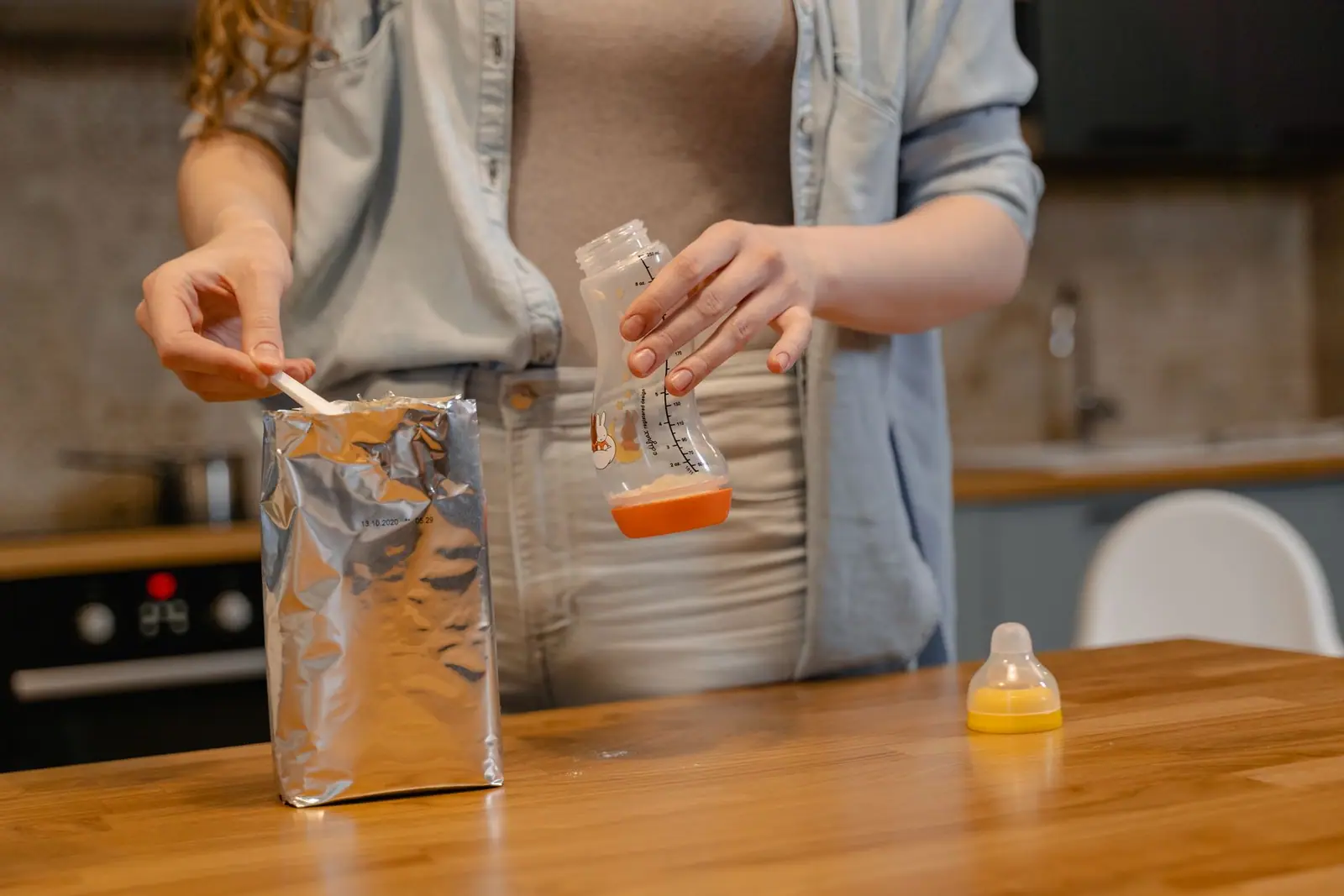
CDC advises washing bottles after each feeding, separating parts and allowing them to air-dry before storage. Its hand-washing guidance uses a feeding-item basin and dedicated brush rather than the kitchen sink itself. Keep the clean equipment separate from dirty bottles arriving home.
CDC identifies babies younger than two months, those born prematurely and those with weakened immune systems as groups for whom daily sanitizing is especially important. Older healthy babies may not need separate daily sanitizing when bottles are cleaned carefully after use. Follow each component’s instructions when choosing a heat method.
Before adding a machine to the basket, check the parts’ cleaning instructions and the household’s existing equipment. Glass bodies, silicone nipples and plastic rings may not share identical care limits. The sterilizer cost comparison separates washing, sanitizing and drying so an appliance is not purchased to perform a function it lacks.
Allow for the time and storage space needed to finish that cycle. An expensive bottle left damp in a closed carrier is not made ready by its material. A smaller inventory can work when washing and drying fit the schedule, while a clean reserve can make a real overlap manageable.
Questions people ask
How much more is the named glass pack?
The $49.49 four-pack costs $21.50 more than the selected $27.99 plastic four-pack. Both listed examples are 8-ounce bottles with medium-flow nipples.
Does glass always become cheaper over time?
The sources do not establish a universal replacement rate. Compare the packages the household would purchase under clearly stated loss or replacement scenarios.
Can a lost glass bottle be replaced for $12.37?
That is the four-pack price allocated per bottle, not an individual replacement listing. Check which replacement bodies or packages are sold before entering a cash cost.
Is cleaning different enough to skip sanitizing glass?
Material alone does not decide the routine. Follow CDC guidance for cleaning and sanitizing and the manufacturer's care instructions for every bottle component.
Where these figures come from
- Plastic 8-Ounce Bottle Pack Variants Lansinoh · lansinoh.com
- Glass 8-Ounce Bottles: Price and Construction Lansinoh · lansinoh.com
- Bottle Collection and Package Sizes Lansinoh · lansinoh.com
- Cleaning, Sanitizing and Storing Infant Feeding Items Centers for Disease Control and Prevention · cdc.gov
Figures last checked October 2026.